Begin of page section:
Page sections:

  • Go to contents (Accesskey 1)
  • Go to position marker (Accesskey 2)
  • Go to main navigation (Accesskey 3)
  • Go to sub navigation (Accesskey 4)
  • Go to additional information (Accesskey 5)
  • Go to page settings (user/language) (Accesskey 8)
  • Go to search (Accesskey 9)

End of this page section. Go to overview of page sections

Begin of page section:
Page settings:

English en
Deutsch de
Search
Login

End of this page section. Go to overview of page sections

Begin of page section:
Search:

Search for details about Uni Graz
Close

End of this page section. Go to overview of page sections


Search

Begin of page section:
Main navigation:

Page navigation:

  • University

    University
    • About the University
    • Organisation
    • Faculties
    • Library
    • Working at University of Graz
    • Campus
    Developing solutions for the world of tomorrow - that is our mission. Our students and our researchers take on the great challenges of society and carry the knowledge out.
  • Research Profile

    Research Profile
    • Our Expertise
    • Research Questions
    • Research Portal
    • Promoting Research
    • Research Transfer
    • Ethics in Research
    • Commission for Scientific Integrity
    Scientific excellence and the courage to break new ground. Research at the University of Graz creates the foundations for making the future worth living.
  • Studies

    Studies
    • Prospective Students
    • Students
    • Registration for Study Programme (Winter semester 2026/27)
    • Welcome Weeks for First Year Students
  • Community

    Community
    • International
    • Location
    • Research and Business
    • Alumni
    The University of Graz is a hub for international research and brings together scientists and business experts. Moreover, it fosters the exchange and cooperation in study and teaching.
Topics
  • Sustainable University
  • Researchers answer
  • Work for us
Close menu

End of this page section. Go to overview of page sections

Begin of page section:
You are here:

University of Graz ARQUS News Spätes Erbe
  • About Arqus
  • Our Offer
  • Open Calls
  • Contact us
  • News

End of this page section. Go to overview of page sections

Tuesday, 17 August 2021

Spätes Erbe

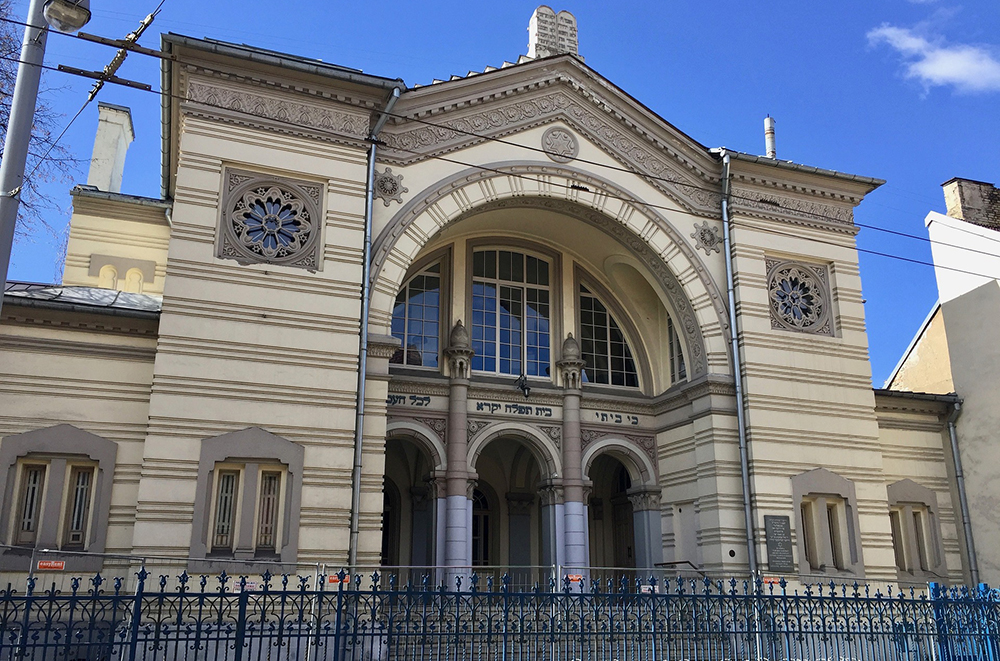
Synagoge in Vilnius: eines der wenigen sichtbaren Zeichen jüdischen Lebens. Foto: johnmirra748 - Pixabay

Choral-Synagoge in Vilnius: eines der wenigen sichtbaren Zeichen jüdischen Lebens. Foto: johnmirra748 - Pixabay

Jüdisches Leben in Vilnius war vergessen. Zeithistorikerin Susanne Korbel erklärt, warum.

Es trennen sie zwar 1400 Kilometer, dennoch verbindet die Universitäten Graz und Vilnius einiges. Zum einen sind sie Partnerinnen der europäischen Universitäten-Allianz Arqus. Zum anderen hat sich Susanne Korbel, Forscherin an der Uni Graz, mit der lange stark verblassten jüdischen Erinnerungskultur in der Hauptstadt Litauens beschäftigt.

Schlamassel, Ramsch und meschugge. In Vilnius waren diese Begriffe Alltagssprache. „Es war das Zentrum des Jiddischen und daher seit 1925 auch Sitz eines weltweit renommierten wissenschaftlichen Instituts zur Erforschung des osteuropäischen Judentums, kurz YIVO“, erklärt Susanne Korbel vom Centrum für Jüdische Studien.
Etwa 60.000 Jüdinnen und Juden lebten bis zum Zweiten Weltkrieg in der baltischen Stadt und bildeten damit ein Drittel der EinwohnerInnen.
Spuren dieser reichen Geschichte im „Jerusalem des Nordens“ wurden mit der Vertreibung und Ermordung der jüdischen Bevölkerung ausgelöscht. Über viele Jahrzehnte. „Man spürte hautnah die Leere. Denn man sah sogar am Hauptplatz verwaiste Wohnungen, wo früher jüdische Familien lebten“, schildert Korbel.

Vor allem in den vergangenen zehn Jahren begann Vilnius, sich verstärkt an das Judentum zu erinnern und das Kapitel aufzuarbeiten. Die Forscherin begründet, warum dies so spät passierte: „Die Auseinandersetzung wurde von der Erinnerung an das sowjetische Okkupationsregime überlagert, das war auch in der Gedenkkultur sehr präsent.“ Denn nach dem Fall des Eisernen Vorhangs erlangte Litauen erst 1990 seine Unabhängigkeit zurück.
Mittlerweile spielt die jüdische Vergangenheit wieder eine Rolle. Nicht nur im Gedächtnis an Schrecken und Vernichtung, sondern auch in der Tourismuswerbung, etwa mit jiddischen Musikfestivals. Sogar das Erbe des YIVO – heute in New York beheimatet – wird gepflegt, indem unter anderem jiddische Sprachkurse angeboten werden.


created by Andreas Schweiger

Related news

Arqus project at the University of Graz receives EIT funding

Arqus is pleased to announce that the EAS-EL – the European AI Sandbox for Entrepreneurial Learning project led by the the University of Graz – has been selected for funding as part of the EIT’s ‘Higher Education Initiative 2025’.

This was the Arqus Annual Conference 2026!

The 6th Arqus Annual Conference took place in Maynooth under the theme ‘Voices of Impact’.

Another success for the Arqus Alliance

The EDLive project – The European Degree Label Live: From Vision to Action, coordinated by the University of Graz, was selected for funding under the Erasmus+ Partnerships for Excellence: European Degree exploratory action call.

Erasmus+ funding approved: The Arqus University Alliance is moving into the next phase!

Begin of page section:
Additional information:

University of Graz
Universitaetsplatz 3
8010 Graz
Austria
  • Contact
  • Web Editors
  • Moodle
  • UNIGRAZonline
  • Imprint
  • Data Protection Declaration
  • Accessibility Declaration
Weatherstation
Uni Graz

End of this page section. Go to overview of page sections

End of this page section. Go to overview of page sections

Begin of page section:

End of this page section. Go to overview of page sections